Friday, 20 December 2013


TIME WELL SPENT


Whoa, still seems like a dream, I am now a Master’s degree holder in the early childhood field. I remember when I first started, I tried to imagine when it would be over, but I told myself, take one step after the other and hold on to your passion, commitment, dreams, be strong and you would see, you will get to the finishing line standing strong a different and better person.  I am grateful to God, my family, my parents, Walden institution, Walden instructors and my colleagues, without all these support, I would not be writing this heartfelt message today.
My experience with my program at Walden has truly being remarkable and a measurable professional growth for me; it has truly broadened my view of the world, of issues affecting children, families, and the early childhood field across the globe.

Three deeply felt learning experiences from this program are that:

 I need to have a passion, a vision, understand myself and strive to achieve greatness, to make a difference in the world. I am a different person both personally and professionally, I understand my strengths, weakness, bias, passions and desires, and more convinced and focused on the role I have to play in the lives of children, families, and the early childhood field.
I have also learn that to truly contribute to making changes, as educators or professionals, we need not sit on the fence but stand up for issues, take up leadership roles and also lead or be a part of advocacy for change.
 I have come to realize the importance of collaborative effort and its impact in achieving greater goals, and also ways to go about bringing together people who share similar interest with you together, in order to make a difference in the world

My long term goal is to continue to develop myself professionally, through reading resources, and networking, and also continue to pursue my advocacy effort for more focus on play, and probably in the near future go for my doctorate degree.

I would like to say my farewells to all my instructors at Walden, and a big thank you to Dr. Teri, for her support and constructive criticisms; it really made me a better writer and accomplished my research challenge more confidently. I would like to thank all my colleagues, and say a big farewell to everyone; you have all made a significant impact to my success. I say thank you all, and wish you all the best in your future endeavors.

BEST WISHES

Saturday, 7 December 2013

Jobs/Roles in the ECE Community: Internationally

For this week, while exploring various international early childhood organization while trying could  imagine myself in the variety of jobs that foster the well-being of children, families, and the early childhood field, several organizations caught my interest based on their mission and vision for the children, families and the early childhood field across the world. Three of the organizations and the job opportunities of interest are discussed below
 Child Fund International is an organization inspired and driven by the potential that is inherent in all children; the potential not only to survive but to thrive, to become leaders who bring positive change for those around them (Child fund, 2013).
Their goal is to help deprived, excluded and vulnerable children living in poverty have the capacity to become young adults, parents and leaders who bring lasting and positive change to their communities and also work to promote societies whose individuals and institutions participate in valuing, protecting, and advancing the worth and the rights of children (Child fund, 2013).
The job opportunity of interest is the Program Officer
The Program officer will work within the Program Development Division to provide technical support for Child Fund's Early Childhood Development Campaign. The Program Officer (PO) will work collaboratively with home office and field-based colleagues in support of effective program development, enhanced program learning, and resource development, in line with Child Fund's theory of change for infants and young children (Child fund, 2013).
I believe this position will help me grow professionally because position offer significant opportunity for growth and independent direction and many opportunities for leadership on initiatives and partnerships (Child fund, 2013)
Some of the minimum requirements are a bachelor degree related to early childhood development and maternal child health and nutrition or similar field and/or equivalent relevant experience, 1-3 years of experience in international development, or some experience living or working in a developing country required and a demonstrated exposure to program design, implementation and evaluation concepts, preferably relevant to related to early childhood development or gender
I believe I have the qualification, I have also lived in a developing nation and have knowledge about team work which I could foster better through this job but I do not have any international experience yet  

Save the Children is the world's leading independent organization for children. They work in around 120 countries saving children's lives; fighting for their rights; and helping them fulfill their potential. This they achieve by inspiring breakthroughs in the way the world treats children and to achieve immediate and lasting changes in their lives (Save the Children,
 Job-Early development specialist
This position is part of the International Program Department of Education and Child development team with a central focus in the area of early childhood care and development (Save the Children,). The Early Childhood Development Specialist will provide technical support to country offices in the design, implementation and monitoring of ECD programs (Save the Children,). In this role the ECD Specialist will contribute to quality assurance and program development by providing remote and in-person technical assistance, building capacity among program staff, and expanding the implementation and continual revision of Save the Children's ECD interventions( Save the Children,)
The Requirements for the position is a Masters in early childhood development, education, or related field, three to five years prior early childhood development program design/ implementation experience, experience in developing countries and an excellent communication skill in English and Spanish.
For this job, I believe that I have the knowledge based on my specialization on Early childhood program’s planning administration and management, the qualification, fluency in English but cannot speak Spanish and do not had those years of experience in any early childhood development program.

The FHI360- The Science of Improving Lives
 FHI 360 is a nonprofit human development organization dedicated to improving lives in lasting ways by advancing integrated, locally driven solutions (FHI360, 2013). Their staff population consists of individuals who are experts in Health, Education, Nutrition, Environment, Economic Development, Civil Society, Gender, Youth, Research and Technology, thereby creating a unique mix of capabilities to address today's interrelated development challenges(FHI360, 2013).
FHI 360 serves more than 60 countries and all U.S. states and territories and their work is grounded in research and science, strengthened by partnerships and focused on building the capacity of individuals, communities and countries to succeed (FHI360, 2013).
To improve lives in lasting ways by advancing integrated, locally driven solutions for human development
They are currently seeking qualified candidates for the position of early childhood Specialist, Region XII (Project Manager I) in Washington, DC or remote location.
The Early Childhood Early (ECE) Specialist will provide technical assistance and training to Head Start Grantees in areas related to school readiness, training and career needs of Grantee staff, and collaboration activities (FHI360, 2013). Some of the minimum requirements for the position is a minimum of a BA or BS Degree in Early Childhood Education, with a preference for a Master's degree, minimum of 5 years experience in programs serving young children, theoretical knowledge of child development, able to speak Spanish fluently and experience working with Migrant and Seasonal Head Start.
I chose this job because I have always imagine myself working for an organization in the United States  and also have experience opportunity with Head start because of the services its provide. Although I might not qualify because of my lack of experience and not being able to speak Spanish, but would definitely like to work in the organization.  


References

Child’s Fund International, (2013). Retrieved from http://www.childfund.org/
   
FHI 360, (2013). Retrieved from http://www.fhi360.org


Saturday, 23 November 2013

Jobs/Roles in the ECE Community: National/Federal Level


Exploring through various national organizations in my country Nigeria for this week, I found three organizations that were of interest based on their goal as a community.
Child Rights Awareness Creation organization.
 CRACO is a community of practice formed based on the passion to render humanitarian services. The organization focuses majorly on creating awareness on children’s rights and promoting same (Child Rights Awareness Campaign organization, 2011).This they achieve through publications, public lectures, songs and film production, and through the media. They work with schools with the aim of impacting human right education on students as well as training teachers to teach same, and they also undertake legal case work on behalf of children, in collaboration with relevant Government agencies (Child Rights Awareness Campaign organization, 2011).  They are interested in the protection of the rights and welfare of women, especially widows who undergo a lot of oppression in our society because they believe Children’s rights and welfare cannot be truly guaranteed if their mothers’ rights and welfare are not guaranteed (Child Rights Awareness Creation organization, 2011).
There are no job openings but membership is open to interested participants. But since I have the knowledge and skill as an early childhood professional, I believe I can contribute in creating public awareness through public lectures, education/ training of teachers and also through publications.

The second community is the Defense for Children International(DCI) is an independent non-governmental 
organization set up to ensure on-going, practical, systematic and concerted international action specially directed towards promoting and protecting the rights of the child.(Defense for children, nd).They Lobby with governments and the United Nations, provide training or education  and research on  child rights, undertake legal casework on behalf of children, and work in partnership with organizations, media,  press and also directly with children in Nigeria .(Defense for children, nd)

There are no job openings but based on their area of expertise which includes Children and the media,  Education and cultural rights, Health and welfare,  cases of violations, Justice, Sexual exploitation and abuse. I believe as a professional in the early childhood, and my various researches on international organizations and how they can support children rights; I believe I can contribute as an advocate and also be directly involved through research, education and training for promoting children’s right to education, healthy, stable and violent/abuse free life

The third is the National Coalition on Children's Rights (NCCR). They work to monitor and implement the Convention on the Rights of the Child nationally in Nigeria. They achieve their advocacy goal through lobbying with the Government and the United Nations; they perform more of implementation role (National Coalition on Children's Rights, nd).
There are no job openings because I could not locate their official website on the internet. But based on their mission of implementing conventions, I believe this requires planning. As an early childhood professional with specialization in Management, Planning and Administration, I believe I can contribute to the organization through planning organization of conventions that seeks to address children’s rights in Nigeria.


References

Child Rights Awareness Creation organization, (2011). Retrieved  from http://cracong.org/index.html
Defense for Children International, (nd) Retrieved November, 22 from Children Rights International Network, (2013). http://www.crin.org/organisations/viewOrg.asp?ID=1150
 National Coalition on Children's Rights,(nd). Retrieved November, 22 from Children Rights International Network, (2013). http://www.crin.org/organisations/viewOrg.asp?ID=1150

Saturday, 9 November 2013

Exploring roles in ECE community.


While researching throughout this week on early childhood education community that I could imagine myself taking up jobs that could help me contribute to supporting children, families and the early childhood field as a whole, It was difficult for me to get information about local or state early childhood organization in my country Nigeria or Saudi Arabia, most of the early childhood organization with sufficient information were internationally affiliated. Most of the state or local organizations in my country did not have a website or sufficient information on the web page I found them. At the end of my search I was inspired by three
Save the African Child Development Initiative- is a community-based non-governmental association whose mission to support individuals and organizations working to protect children from Abuse and Neglect in Nigeria, Africa and the world in general. Their Guiding Principle is to listen to children, take their views seriously and promote their interest as well as focus on things that will make a positive difference to children lives, giving priority to vulnerable. (Save the African child development initiative, n.d)
Evergreen CSC( ECSC) is also a community-based  non-governmental association which aim is to eradicate street living among African children, to fight for the right of African child and to build a better tomorrow for children through seminars and workshop. They Provide training or education on child rights, Research child rights, Undertake legal casework on behalf of children, Work directly with children, Work in partnership with organizations, Work with media and press.(EvergreenCSC, n.d)
Edem Children Foundation (ECF-Nigeria) focuses on reducing violence against women, children and young people, reducing the incidence and impact of HIV/AIDS on orphans and vulnerable children, as well as mother-to-child empowerment opportunities. They believe that access to basic services is an integral part of a right based approach to development.( ECF, n.d)
 These associations are all group under the Child Right International Network of Nigeria and the information was retrieved from their webpage. There is no information on job opportunities or membership information on the webpage I got their information from.
References

 Child Right International Network, (2013) http://www.crin.org/
Edem Children Foundation, (n.d). Retrieved November, 9, 2013 from http://www.ecfnigeria.8m.com/

Saturday, 27 April 2013

APPRECIATION


Reflecting on my experience for the past 8 weeks; I would say that my communication skills has greatly improved and I would continue to work on it for the greater goal of making the difference in the lives of young children and families. I would therefore say THANK YOU to Dr.Thomason for helping me make that remarkable change through her approaches and resources provided for understanding communication better and to be effective in a diverse society. I would also like to thank my colleagues for their insightful and generous comments on my blog post; I really appreciate your support. We are a team as professionals and I wish everyone the best of luck as we embark on another journey. I hope we continue to be better communicators and role models to the lives we touch and the people we interact with. I wish we all continue to improve on our communication skills and continue to make a difference in the world. Finally I sincerely hope I would be a part of Walden Commencement ceremony and have the opportunity to meet every one to celebrate our success and professional growth together. Once again; thank you and best wishes.

Saturday, 13 April 2013

Adjourning stage


According to Abudi, (2010) “Every team goes through the five stages of team development. The five stages:
  • Stage 1: Forming
  • Stage 2: Storming
  • Stage 3: Norming
  • Stage 4: Performing
  • Stage 5: Adjourning

 The adjourning stage is when the team is completing the current project. They will be joining other teams and moving on to other work in the near future. For a high performing team, the end of a project brings on feelings of sadness as the team members have effectively become as one and now are going their separate ways. The team leader should ensure that there is time for the team to celebrate the success of the project and capture best practices for future use. (Or, if it was not a successful project - to evaluate what happened and capture lessons learned for future projects.) This also provides the team the opportunity to say good-bye to each other and wish each other luck as they pursue their next endeavor. It is likely that any group that reached Stage 4: Performing will keep in touch with each other as they have become a very close knit group and there will be sadness at separating and moving on to other projects independently. (Abudi, 2010)

This goes to show that adjourning is crucial and essential in any team work. It indicates success and closure, evaluation and lesson learned, feeling of accomplishment, reflection and moment to make and discuss plans for the future, moment of merry and satisfaction about making a difference. This stage is also good for one’s self esteem, and gears individuals towards striving to achieve positive goals. It’s an emotional phase, filled with joy and sadness; having to say goodbye to group of people you have worked with as a team and support each other’s challenges as a team. Friendship definitely as being formed as human nature builds relationship around interaction, trust, commitment, empathy and support.
Of all the team work I have being a part of, a particular one stood out for me because of the success of the project and the adjourning phase. The team goal was to revive an association magazine. Six members were selected; two female and 4 male all form the field of arts and humanities. It was an amazing experience for me, I learnt a lot and I also got a lot of exposure within a short period of time. At the end the magazine was produced and we moved to the adjourning stage where we all told one another how well we performed and would not mind to working together on another project. We had our farewell ritual with a dinner party at a nice restaurant. The team leader was a wonderful person; He made the event a surprise packaged. It was fun and we all sat down to talk for hours about our dreams and ambitions. We ate, drank and we also got free copies of the magazines as our complimentary gift. Aside from that a certificate was given to members .We are all still good friends, although I lost contact with the other female team mate. I still communicate with the others via phone and social media even though we are far apart.
It has being amazing working with colleagues of different culture at Walden university. We have worked together sharing ideas and perspectives, supporting one another’s growth through interactive discussion and blog posts. I wish our adjourning stage would give me the opportunity to meet everyone in person, in form of an informal ceremony, where we get to talk wine and dine as professionals in the field. I believe some of us would still continue our relationship after this program. We have been like a team, working together for a common goal to acquire a higher degree to make a difference in the lives of young children and their family across the world and the early childhood field in generally. An adjourning phase is therefore needed and I truly hope and pray I am a part of it. I wish everyone all the best in this course and the rest and hope we meet to perform the last stage of our team building.

Reference

Abudi, G. (2010). The five stages of team development: A case study. Retrieved from http://www.projectsmart.co.uk/the-five-stages-of-team-development-a-case-study.html

Saturday, 6 April 2013

WEEK 5 - Nonviolent Communication and Conflict Management


Conflicts occur in our personal and professional relationships as well as our interaction with our community. Conflicts can either be managed productively or unproductively. Conflict management therefore, refers to the way that we engage in conflict and address disagreements with our relational partners. Unproductive conflict is conflict managed poorly and has negative impact on the individuals and relationships involved. While productive conflict is conflict managed effectively (O’H air & Wiemann, 2012). When we engage in productive conflict management we are able to make better decisions that would be of benefits to parties involved.
A recent disagreement I had was with my husband regarding the choice of preschool for my daughter when she eventually wants to start. My husband and I had not really discussed it but in some ways we had assumed that she would be enrolled in the same school with his colleague’s kids, but as I watched my daughter grow, I began to understand her better. I saw her as a very active ,spirited child who loves to learn new things but in a more unconventional and play-like manner and since I am an advocate of play in the early years I thought I needed to really take my time to ensure the preschool we eventually enroll her into would be able to meet her needs. I decided to discuss it with my husband, there was disagreements because my husband taught the issue of her school was a done-deal ,he had even made enquiries about tuition and some other information about the school meanwhile I was searching for other options. He made me realize that in some ways I had said things that indicated my interest in the school, so why the sudden change, he also said his colleague said ,all the schools offer the same thing, which I disagreed with him. He had a point I had showed and indicated earlier that she could start the preschool but that was before I began to understand my daughter’s personality better. I felt the best I could do was to look for a preschool that shares my goal of learning and create an environment that would enable her discover her full potential. After stating several facts and reasons ranging from locations, to tuition fees, facilities , reputation and teaching and learning strategies, I advised him to make conscious effort to spend more time with her and if he did not understand my point of view ,then I would reconsider. He did, at least for the benefit of doubt; I was surprised when he came to me and asked the schools I have being checking of late .We both concluded we need to search for schools that would meet our desire while given cost into consideration as well as location. We are yet to decide one but at least we have both agreed on what type we want.
I believe our conflict was aimed at bringing about a better decision for an important plan in our family; our daughter’s education, it was therefore necessary we took a productive step, despite the fact that we both had our reasons for disagreeing
The conflict managing strategies I feel would be appropriate for this disagreement would be to focus on the issue, consider options and alternative as well as adopt the cooperative strategy. I believe when we use these strategies we would be able to arrive at what is best for our daughter without hurting each other’s feelings.When one is aware of how to address conflicts it goes a long way in preventing the damages that comes with conflicts and violence.

Reference
O’ Hair, D. & Wiemann, M. (2012). Real communication: An introduction. Boston, MA: Bedford/St. Martins’s.


Saturday, 30 March 2013

Communication Evaluations

For this week, we were to evaluate how we communicate and how people we interact with evaluate us. I decided to choose my husband and a friend. After the evaluation, the listening styles profile was the only one we all shared the same results. For my communication anxiety inventory my friend and I had the same result which was that I fell into the ‘low category’, which means I feel comfortable communicating in most situations and feel confident in anticipating such encounters’ while my husband’s result I fell into the ‘mild category’ which indicate that I might feel a bit uneasy in some communication situations and somewhat more confident in other contexts. Communication does not seem to be something that worry a great deal about .I guess my husband’s result or evaluation could be based on his view that I sometimes get intimidated by authority figure when communicating in such context  which to certain extent I  could agree with him
The second evaluation result which evaluates verbal aggressiveness; my husband and my result were similar while my friend was different. My husband and my evaluations gave me a ‘moderate scale’ as result which indicates that I maintain a good balance between respect and consideration for others viewpoints, and the ability to argue fairly by attacking the facts rather than the person holding that position. I believe this really resonates with me, unlike my friend’s result which falls into the ‘significant scale’ which indicates with little provocation I might cross the line from “argumentativeness’ which attacks a person’s position or statements and verbal aggression; which involves personal attacks and can be hurtful to the listener. This I do not agree with because I believe I have always being very cautious in getting into argument that  involve verbal abuses; I personally do not like to be a victim so I do not perpetrate it; it’s a principle I have upheld for years.
 For the third evaluation on my listening styles profile; the result came out the same for the three of us. i fell into the ‘group -1’ category which shows I am people- oriented .This category indicates that I am empathetic and concerned with the emotions of others .This listening styles helps me build relationship but it can interfere with proper judgment because I tend to be very trusting of others. I feel this most likely resonates with me in a large way because I trust and tend to think of the best about people; but sometimes I am surprised when people tend to be the opposites, even with such experiences, I still continue to give people the benefit of the doubt.
One thing that surprised me the most was the result from my friend on the verbal aggressiveness, which shows that with little provocation; I might exhibit verbal aggressive behaviors; I do not really agree with that because I find it very difficult to utters verbally aggressive words rather I usually avoid such situations by changing the topic or walking away from it.
The insight I gained from about communication from this evaluation is that to be effective in communication one needs to understand how one communicate with others and also take note of our others perceive us in order to fully understand if we are communicating appropriately with others. When we realize our lapses, our ability to make changes makes us better communicators.

As an early childhood educator, I therefore believe that I need to evaluate myself based on how I communicate with others and be committed to making adjustment. The impression others have about us plays an important role in developing our self concept; therefore evaluating our communication from time to time helps us maintain an appropriate balance when we communicating and interact with others.

Saturday, 23 March 2013

Communicating with diversity

Culture plays a strong role  in determining who we are and our interaction with others. Just as we learn through culture through communication, we also use communication to express our culture. Our world view affects which topic we will discuss in personal and professional settings, as well as the way we communicate non verbally, it also affect the way we perceive the communication of others( O'Hair & Wiemann, 2012). Communication with my family, colleagues and my community varies; I believe this is greatly influence by my cultural upbringing. My culture has greatly influenced how I communicate with people. Differences in people such as age, religion, marital status, values, personality too mention a few has greatly influenced how I communicate with people
 In terms of age ,I have being taught to be more respectful when talking with an adult ,being conscious of the words I use so as not to sound rude or insensitive of the persons  age. I am expected to refer to the person with certain words that represent the title that would be sued to show respect, for example.”SIR”,”MA”. The way I talk with my father is different from my mother; my culture accords more respect to the father than the mother since he is the decision maker, so you are groom to talk using certain worlds as an indication of respect when having a conversation with him. For mothers it could be subtle, talking to my in-laws as well is quite different from the way I talk with my parents. The way I talk with my friends not married with kids is quite different form those married with kids. The status must be recognized and acknowledge during the course of communication. I could remember a friend complaining that a friend of hers from university still talks to her the same way as their schools days and she didn't feel comfortable with it that she felt, he should acknowledge her status change in any conversation with her. It is required that a married woman with child demands to be spoken to differently compared to when she was not.
Religion also influence my communication and makes it different. Different in terms of certain communication rituals that are part of my religion; so when I am communicating with someone of the same faith with me, those rituals would be part of our conversation; such as greetings, eye contact, gestures and verbal phrases  for condolences, when a person sneezes or to congratulate which is mostly communicated in Arabic irrespective of our mother tongue .Whereas if it I need to communicate with someone of a different faith I do not need to utter those verbal and non-verbal cues  in our conversation
When I communicate we someone that is my close friend, its more casual; probably using codes, symbols and contradictory behavior in my non-verbal communication when joking around and when It is with members of my community that speak different languages, then take my time to speak the few word I know, I would have to use signs, non-verbal codes in order to get buy. If I have to communicate with an authority figure such as lecturer, professor or my employer; I may be more formal than casual; maintaining a consistent eye contact to show that I am seriously involved in the conversation and avoid using informal words like” slang  or “codes” that would probably use with my friends

Since it is apparent that our society is fast becoming more diverse and if we want to avoid conflicts we must be able to put those factors that make us different into consideration when communicating. So in order to communicate competently as  member of such diverse society, you need to be able to communicate appropriately and effectively with a wide variety of individuals (O'Hair & Wiemann (2012). 


Reference

O'Hair, D., & Wiemann, M. (2012). Real communication. New York: Bedford/St. Martin's


Saturday, 16 March 2013


Communication


 This week I had the opportunity to understand communication through an episode on a television. I watched the TV series “Cougar town”. The main character there caught my interest; COURTNEY COX. Watching without sound left me with questions and uncertainty; I did not really know the relationship between the characters. Although I could give certain assumptions based the context and the non-verbal cues expressed by the characters but they might not be correct. The communication skills used included verbal, non-verbal (facial expressions, gestures) writing and listening. I could not really tell what the episode was about without the volume. In the first scene, I noticed Jules (Courtney Cox) talking with friends in a kitchen, it seems like they are friends with her, I guessed because their facial expressions and gestures reflected a more casual relationship. Also Courtney is seeing a therapist, but I do not know for what purpose. I did not know if she had any other relationship with the therapist outside her visitations. I also guessed she is married because I saw her with a man on a bed talking. The scene when they showed three men in place like a bar. I do not know who they were and their relationship or what they were discussing, although their facial expression seems casual, expressing lots of smiles. I noticed a particular female character that her facial expressions and gestures shows a lot of anger, but I do not know why or how serious. I noticed a scene where a lady came into what seems like a departmental store and spoke to two men. The man that looked older gave the younger one a sign by bending his head, indicating to be excused. I guess he wanted to interact with the lady; which he did in another scene. I could go on with assumptions from different scenes but that does not really tell what the episode was all about.
When I watched the volume on, I did not really enjoy it as I would have with TV shows/series that I normally watch. Some of my assumptions were somehow correct. The three ladies at the first scene seemed like friends with their conversations, and the lady expressing so much non verbal anger as well as verbal which I now heard, was angry because she had feelings for Travis a character who is probably the son of Jules (COURNEY COX) so she takes it out of everyone. I assumed the female therapist was more of a friend when there was no sound I realized, she just made the proposal for friendship during the sessions, which the therapist loved the idea. I was right about the man I called her husband and I got to know her reason for therapy which was because of her obsession with monitoring people. I was confused with Travis being her son yet he calls some man his dad, I guess because I did not have any previous information about the characters .After watching the whole episode, I realize I would have enjoyed it better and not be doubtful, if I had being watching it before.

I believe that with this experience I have come to the understanding that for communication to be effective and serve its purpose; all necessary factors must be in place. We need to consider the individuals involved in the conversations, relationships, communication skills used, contexts, and our schema on them as well as the   purpose  and goals of the communication in order to avoid confusions, assumptions, misunderstanding  and complete communication failure . When we don’t apply the right requirement then our communication would not serve its purpose. We need to use the right skill, for the right situation and for the right purpose and people then  it would be effective.

Saturday, 9 March 2013


Competent communicator


Effective communication is important in any form of interaction. I have being opportune to have experienced some great competent communicators in my life; but the particular one I chose to talk about as contributed to my desire to aspire towards a leadership role in my chosen, I desire to be able to coordinate an effective program and I know being able to communicate effectively with your staff, children and their families is very crucial. The person I knew that demonstrated competent communication was a friend of mine during my university days. She currently runs a school in Lagos; I am not surprised she is doing very well with her staff. They all love her. The last time I visited, the teachers and staff organized a special end of the year celebration and gave her an award. When I knew her back in the university, she always had a way with words, like she knew what you wanted to hear; more of an inspirational and motivational speaker. She has a good listening ears. I guess that is her strongest point. I could remember when I told her I was a bit nervous about my first day of teaching practice. She let me express all my fears and anxiety; she then looked into my eyes convincingly and  told me to relax that I would do just fine. All I needed was confidence in what I had to offer, a pleasant face and everything would be fine. When I saw her speaking on the day she was awarded I was impressed because she still had that confident with her choice of words.
  
Leadership is executed through communications, I would therefore like to emulate her confident, use words and gestures that shows honesty in her messages which tend to make people believe in themselves and therefore bring out the best in them.  

Saturday, 2 March 2013


Week 8
                            Professional Hopes and Goals


My eight weeks experience with the course perspective diversity and equity has brought about a lot of changes for in me; changes in terms of knowledge, insights, hopes and dreams as well as goals I hope to attain as a professional in the field

The hope I have when I think about working with children and families who come from diverse backgrounds is that every child and family’s culture is respected and is actively reflected in the school setting, structures,activities and curriculum

The goal I would like to set for the early childhood field related to issues of diversity, equity, and social justice is that the early childhood field should promote and reflect an inclusive environment where all differences and challenges are acknowledge and always visible  in the learning process. This I believe would develop in children and families positive self esteem, respect and appreciation of other cultures, as well as compassion towards those with challenges.

This journey would not have being possible without supports. I would therefore like to thank my instructor and colleagues for making this experience and journey a fruitful one. The ideas, insights and experiences shared have had tremendous impact on my personality .As we continue in our journey to become better as professionals; I wish everyone the best of luck.

Sunday, 24 February 2013


Welcoming Families From Around the World

Diversity is in every institution of every society; the educational systems inclusive. Professionals working in the educational institution needs to be aware as well as be prepared to handle these situations effectively so that new families from different countries can integrate successfully into the society.
I imagine I am working in a child care center and I received word that the child of a family who has recently emigrated from a country I know nothing about will join my group soon. I intend to prepare myself to welcome the child and her family and since luckily for me I am enrolled in a course about diversity and I have learned that in order to support families who migrants ; I need to know more than surface facts about their country of origin.
The country this child’s family emigrated from is Cosmotrons Island .this is actually my first time of hearing about the country. To support the child and his family, I would adopt these five processes  
Ø  Learn about the country’s culture and some aspect of the specific ethnic group; since the country consists of several ethic groups
While researching, I found some information about the island, I would like to share ;its such an interesting culture.
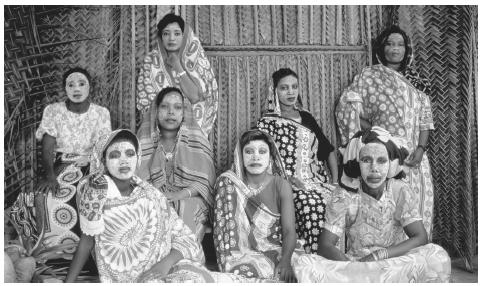
+Comorian residents call their Country Masiwa , "the islands," or refer to the individual name of each island. Zisiwa za Komor is a translation of the French words for the country. "Comoro" comes from the Arabic qumr , "the moon" or qamar "whiteness".Although Comorians practice Sunni Islam of the Chafeite rite, their social organization is matrilineal and residency is matrilocal. Social life is characterized by a widespread system of exchange, which, in turn, creates customary ceremonies and rituals ( aida, shungu ), particularly the Great Weddings ( ndoola nkuu, arusi ). Everyone participates as a member of a given lineage or age group, or as a member of a gender-specific association.  Comorian is a Bantu language that looks like, but is not related to, Swahili; each island has its own way of speaking it. The language contains many words of Arabic and French origin. All Comorians receive a Koranic education and learn to write their language in Arabic characters. Formal education is given in French. Comorians, whose ancient African origins can be seen in their matrilineal social organization, have been influenced culturally by Arabian Islam and the West. Islam is considered synonymous with civilization, but Comorians also have appropriated many aspects of French culture. The official languages—French, Arabic, and Comorian—reflect that cultural diversity..
Family ties have made the islands a single cultural and social. A typical house has two rooms, one private and one for to receiving visitors, and sometimes a living room. The courtyard is used for domestic activities. Boys sleep in bachelor quarters. Women dominate in houses, indoor courtyards, and alleys. Men's territory includes mosques and public squares. Rice is the staple of the daily diet, along with manioc and other root vegetables, plantains, fresh and dried fish, and milk from grated coconuts. Food taboos provide a way to establish connections and acknowledge identity. Ceremonial dishes include beef and castrated goat served with white rice and curdled milk as well as enormous cakes. Another traditional dish is gruel or porridge made with the dried fruit of sago palms. French cuisine and imported beverages are becoming prevalent.
 Children help their parents collect water and wood; girls often work inside the house, while boys work outside. Men and women share agricultural work; men cut down trees and are in charge of money-making crops, while women tend to the food-producing fields. Men fish in canoes or in small imported motorboats, and women sell the fish. Women fish at low tide, using a piece of fabric as a net or a plant that releases a substance that paralyzes small fish. Traditionally, wealthy women do not work in the fields but do kitchen work or embroidery.
The great wedding ceremony identifies accomplished men, who wear a ceremonial coat and a special scarf on Fridays and in some villages enter the mosque through a special door. At Ngazidja, only women who participate in great weddings can wear the bwibwi , a black garment. Village women often wear great wedding jewels to work. In the cities, the size of the house a family builds for its daughter reflects its wealth.
Male social organization rests on age group and status. Musical associations and sports clubs exist in every village. Female social organization, which is less formal, occurs through help groups and customary associations for development. Most women's organizations are devoted to community development and the training of women and youths.Men work to provide for the household and meet the needs of the family. Fear of ridicule keeps men away from housework; an adolescent boy who sleeps in his mother's house is labeled a "girl." Women band together and use their power to influence village affairs through their associations. Modern political life includes women, and one cabinet post is usually staffed by a woman. In the Islamic religious context, women are limited to functioning as Koranic instructors. Despite the practice of polygamy and men's near-monopoly of religious offices, women have a comfortable social status as they are owners of the conjugal house. On Ngazidja, the eldest daughter and her brother are the head of the household and of their mother's lineage. Women have a degree of material autonomy, the role of the mother is praised, and women receive prestige in the organization of the traditional festivals.On average, men and women marry two to four times but sometimes much more often. Very few men are polygamous and even then have no more than two wives at a time. The great wedding must be held in the village and within the family so that the wealth being exchanged remains within the community. It must be the woman's first wedding even if it is celebrated years after a religious marriage took place. Only the husband may repudiate his spouse, although the wife may provoke him to make that decision. 
 The birth of a child is considered a divine blessing. A child is always held by adults or by its brothers and sisters. Children are rarely scolded, though rowdiness is sometimes criticized. Chronic malnutrition affects a third of children below age three; this situation is worse in Ndzuani.Familiarly nicknamed "Mom" and "Dad," children are trained for their future roles at an early age, especially girls, who do heavy domestic work. A boy's circumcision at around age four is celebrated by prayer and a special meal. All children attend a religious school, where they memorize the Koran. Public education is disorganized, and private schools open their doors when teachers at public schools go on strike. Boys enter into the age-class system between ages fifteen and twenty. Pubescent girls are watched closely because pregnancy eliminates the possibility of a great wedding.
One must respect and greet one's elders regardless of their social status. A woman may not go out without a head veil. The wife eats in the kitchen with the children; the husband eats at the dinner table or in the living room, where he may invite a parent or friend. Master in his wife's house, a man must behave with dignity and authority.
 Comorians do not separate sickness from other misfortunes that may be revealed by traditional practitioners who offer herbal remedies, protective amulets with Koranic texts, astrological calculations, or propitiation of possessor spirits. People use these remedies according to the nature of their need (health, love, work, social relations) and wealth.
Oral literature includes stories about the creation of villages, war epics, philosophical poetry, tales, riddles, and proverbs. Novels and poetry in French are available. Artisans produce everyday objects, including sculpted wood coconut graters and abacus-style number games, makeup tables in carved coral, basketry, pottery, embroidery (ceremonial coats, Islamic bonnets, openwork curtains), and jewelry. Traditional musical genres coexist with music performed by modern village orchestras. Comedic and tragic theatrical works deal with historical themes and often are critical of society.
Ø  After knowledge of the child’s culture. I would make effort to learn some basic phrases in a language they are familiar with, since Arabic is one of their official language. I would improve on my Arabic, by learning words that communicate the basic needs of the child.
Ø  I would create a culturally inclusive classroom and environment by reflecting the child’s culture with familiar symbols, books, pictures that would make the child feel welcome and not alienated.
Ø  I would then create an interactive and engaging relationship with the parents through home visits and parent’s participations is in school activities. The home visit would allow me learn more about the child’s family’s culture and dynamics, hierarchical roles, goals and aspirations and I would make conscious effort to adopt this with the child in his learning processes. Parent’s participation in school activities would include active participation in activities such as cultural day or international day; where the parents would create things that reflect their culture or cook food that is peculiar to their culture for the child to bring to school, this way, the families would feel they are part of the system.
Ø  For the child to really feel proud and for others to appreciate her culture as well as benefit from one another, I would create interactive activities that would enable the child share part of her culture. Since oral literature is a strong part of the child’s culture, I would encourage her to share folktales, riddles, proverbs for everyone to benefit from.

I believe that with these processes adopted, I would be able to learn about their culture, their specific family culture and dynamics. This way I would be able to support their child integrating into the school system and gradually into the outside world, as well as fulfill the family goal for their child in the new country. Learning some aspect of their culture and language while actively keeping an interactive and engaging relationship with the family would make them feel a sense of belonging and appreciation. The child would feel an extension of home to school and the transition would be better, making the child perform better in school. The parent would also be ready to support and seek advice when need be; this way the school becomes a part of the child’s socialization process.

Reference
Countries and their culture, (2013).Retrieved from http://www.everyculture.com/Bo-Co/Comoros.html