Welcoming Families From Around
the World
Diversity is in
every institution of every society; the educational systems inclusive. Professionals
working in the educational institution needs to be aware as well as be prepared
to handle these situations effectively so that new families from different
countries can integrate successfully into the society.
I imagine I am
working in a child care center and I received word that the child of a family
who has recently emigrated from a country I know nothing about will join my
group soon. I intend to prepare myself to welcome the child and her family and
since luckily for me I am enrolled in a course about diversity and I have
learned that in order to support families who migrants ; I need to know more
than surface facts about their country of origin.
The country this
child’s family emigrated from is Cosmotrons Island .this is actually my first
time of hearing about the country. To support the child and his family, I would
adopt these five processes
Ø
Learn about the country’s culture and some aspect of the
specific ethnic group; since the country consists of several ethic groups
While researching,
I found some information about the island, I would like to share ;its such an
interesting culture.
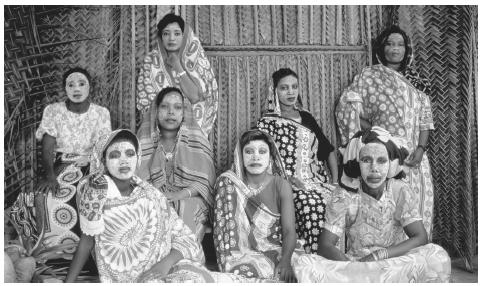 +Comorian
residents call their Country Masiwa , "the islands,"
or refer to the individual name of each island. Zisiwa za Komor is a
translation of the French words for the country. "Comoro" comes from
the Arabic qumr , "the moon" or qamar "whiteness".Although Comorians practice
Sunni Islam of the Chafeite rite, their social organization is matrilineal and
residency is matrilocal. Social life is characterized by a widespread system of
exchange, which, in turn, creates customary ceremonies and rituals ( aida,
shungu ), particularly the Great Weddings ( ndoola nkuu, arusi ).
Everyone participates as a member of a given lineage or age group, or as a
member of a gender-specific association. Comorian is a Bantu language that looks like, but is not related
to, Swahili; each island has its own way of speaking it. The language contains
many words of Arabic and French origin. All Comorians receive a Koranic
education and learn to write their language in Arabic characters. Formal
education is given in French. Comorians, whose ancient African origins can be seen in their
matrilineal social organization, have been influenced culturally by Arabian
Islam and the West. Islam is considered synonymous with civilization, but
Comorians also have appropriated many aspects of French culture. The official
languages—French, Arabic, and Comorian—reflect that cultural diversity..
+Comorian
residents call their Country Masiwa , "the islands,"
or refer to the individual name of each island. Zisiwa za Komor is a
translation of the French words for the country. "Comoro" comes from
the Arabic qumr , "the moon" or qamar "whiteness".Although Comorians practice
Sunni Islam of the Chafeite rite, their social organization is matrilineal and
residency is matrilocal. Social life is characterized by a widespread system of
exchange, which, in turn, creates customary ceremonies and rituals ( aida,
shungu ), particularly the Great Weddings ( ndoola nkuu, arusi ).
Everyone participates as a member of a given lineage or age group, or as a
member of a gender-specific association. Comorian is a Bantu language that looks like, but is not related
to, Swahili; each island has its own way of speaking it. The language contains
many words of Arabic and French origin. All Comorians receive a Koranic
education and learn to write their language in Arabic characters. Formal
education is given in French. Comorians, whose ancient African origins can be seen in their
matrilineal social organization, have been influenced culturally by Arabian
Islam and the West. Islam is considered synonymous with civilization, but
Comorians also have appropriated many aspects of French culture. The official
languages—French, Arabic, and Comorian—reflect that cultural diversity..
Family
ties have made the islands a single cultural and social. A typical house has two
rooms, one private and one for to receiving visitors, and sometimes a living
room. The courtyard is used for domestic activities. Boys sleep in bachelor
quarters. Women dominate in houses, indoor courtyards, and alleys. Men's
territory includes mosques and public squares. Rice is the staple of the
daily diet, along with manioc and other root vegetables, plantains, fresh and
dried fish, and milk from grated coconuts. Food taboos provide a way to
establish connections and acknowledge identity. Ceremonial dishes include beef and castrated goat served with
white rice and curdled milk as well as enormous cakes. Another traditional dish
is gruel or porridge made with the dried fruit of sago palms. French cuisine
and imported beverages are becoming prevalent.
Children help their parents
collect water and wood; girls often work inside the house, while boys work
outside. Men and women share agricultural work; men cut down trees and are in
charge of money-making crops, while women tend to the food-producing fields.
Men fish in canoes or in small imported motorboats, and women sell the fish.
Women fish at low tide, using a piece of fabric as a net or a plant that
releases a substance that paralyzes small fish. Traditionally, wealthy women do
not work in the fields but do kitchen work or embroidery.
The great
wedding ceremony identifies accomplished men, who wear a ceremonial coat and a
special scarf on Fridays and in some villages enter the mosque through a
special door. At Ngazidja, only women who participate in great weddings can
wear the bwibwi , a black garment. Village women often wear
great wedding jewels to work. In the cities, the size of the house a family
builds for its daughter reflects its wealth.
Male
social organization rests on age group and status. Musical associations and
sports clubs exist in every village. Female social organization, which is less
formal, occurs through help groups and customary associations for development.
Most women's organizations are devoted to community development and the
training of women and youths.. Men work to provide for the household and meet the needs of the
family. Fear of ridicule keeps men away from housework; an adolescent boy who
sleeps in his mother's house is labeled a "girl." Women band together
and use their power to influence village affairs through their associations.
Modern political life includes women, and one cabinet post is usually staffed
by a woman. In the Islamic religious context, women are limited to functioning
as Koranic instructors. Despite the practice of polygamy and men's near-monopoly of
religious offices, women have a comfortable social status as they are owners of
the conjugal house. On Ngazidja, the eldest daughter and her brother are the
head of the household and of their mother's lineage. Women have a degree of
material autonomy, the role of the mother is praised, and women receive
prestige in the organization of the traditional festivals.On average, men and
women marry two to four times but sometimes much more often. Very few men are
polygamous and even then have no more than two wives at a time. The great
wedding must be held in the village and within the family so that the wealth
being exchanged remains within the community. It must be the woman's first
wedding even if it is celebrated years after a religious marriage took place.
Only the husband may repudiate his spouse, although the wife may provoke him to
make that decision.
The birth of a child is considered a divine
blessing. A child is always held by adults or by its brothers and sisters.
Children are rarely scolded, though rowdiness is sometimes criticized. Chronic
malnutrition affects a third of children below age three; this situation is
worse in Ndzuani.Familiarly nicknamed "Mom" and "Dad,"
children are trained for their future roles at an early age, especially girls,
who do heavy domestic work. A boy's circumcision at around age four is
celebrated by prayer and a special meal. All children attend a religious
school, where they memorize the Koran. Public education is disorganized, and
private schools open their doors when teachers at public schools go on strike.
Boys enter into the age-class system between ages fifteen and twenty. Pubescent
girls are watched closely because pregnancy eliminates the possibility of a
great wedding.
One must
respect and greet one's elders regardless of their social status. A woman may
not go out without a head veil. The wife eats in the kitchen with the children;
the husband eats at the dinner table or in the living room, where he may invite
a parent or friend. Master in his wife's house, a man must behave with dignity
and authority.
Comorians do not separate sickness from other
misfortunes that may be revealed by traditional practitioners who offer herbal
remedies, protective amulets with Koranic texts, astrological calculations, or
propitiation of possessor spirits. People use these remedies according to the
nature of their need (health, love, work, social relations) and wealth.
Oral
literature includes stories about the creation of villages, war epics,
philosophical poetry, tales, riddles, and proverbs. Novels and poetry in French
are available. Artisans produce everyday objects, including sculpted wood
coconut graters and abacus-style number games, makeup tables in carved coral,
basketry, pottery, embroidery (ceremonial coats, Islamic bonnets, openwork
curtains), and jewelry. Traditional musical genres coexist with music performed
by modern village orchestras. Comedic and tragic theatrical works deal with
historical themes and often are critical of society.
Ø
After knowledge of the child’s culture. I would make effort to learn
some basic phrases in a language they are familiar with, since Arabic is one of
their official language. I would improve on my Arabic, by learning words that
communicate the basic needs of the child.
Ø
I would create a culturally inclusive classroom and environment by
reflecting the child’s culture with familiar symbols, books, pictures that
would make the child feel welcome and not alienated.
Ø
I would then create an interactive and engaging relationship with
the parents through home visits and parent’s participations is in school activities.
The home visit would allow me learn more about the child’s family’s culture and
dynamics, hierarchical roles, goals and aspirations and I would make conscious effort
to adopt this with the child in his learning processes. Parent’s participation
in school activities would include active participation
in activities such as cultural day or international day; where the parents
would create things that reflect their culture or cook food that is peculiar to
their culture for the child to bring to school, this way, the families would
feel they are part of the system.
Ø
For the child to really feel proud and for others to appreciate her
culture as well as benefit from one another, I would create interactive activities
that would enable the child share part of her culture. Since oral literature is
a strong part of the child’s culture, I would encourage her to share folktales,
riddles, proverbs for everyone to benefit from.
I
believe that with these processes adopted, I would be able to learn about their
culture, their specific family culture and dynamics. This way I would be able
to support their child integrating into the school system and gradually into
the outside world, as well as fulfill the family goal for their child in the
new country. Learning some aspect of their culture and language while actively
keeping an interactive and engaging relationship with the family would make
them feel a sense of belonging and appreciation. The child would feel an extension
of home to school and the transition would be better, making the child perform
better in school. The parent would also be ready to support and seek advice
when need be; this way the school becomes a part of the child’s socialization
process.
Reference
Countries and their culture, (2013).Retrieved from http://www.everyculture.com/Bo-Co/Comoros.html

